Carne
Buzau Carnivore
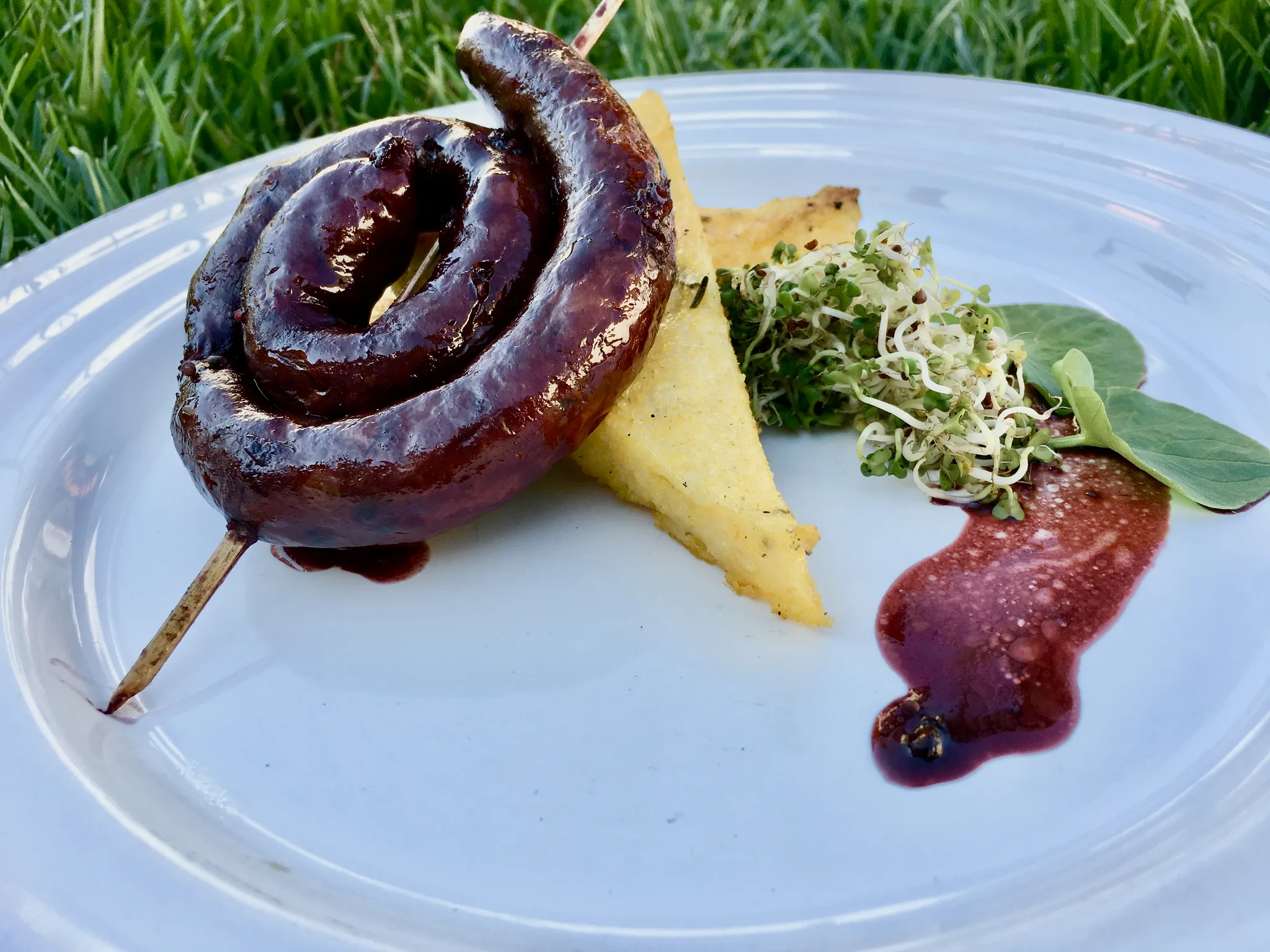
Plescoi Sausages
Product description:
A spicy, smoke-cured sheep-meat sausage in long, slim links of around 15–18 cm and 50 g each, stuffed into natural sheep casings. The seasoning is restrained but assertive: chilli peppers, thyme, paprika and chilli powder, garlic and salt. Two varieties coexist on the market — a raw-dried-and-smoked version and a fresh smoked version meant for grilling. The product is purist by design: no additives, no artificial preservatives, no synthetic casings. Preservation is achieved through salt and smoke alone, using resin-free hardwood, typically beech.
History:
The history of Pleșcoi sausages starts in the area of the Buzău Muddy Volcanoes, in Pleșcoi village, first attested in 1484 under the name “Plăcicoi”. The classic origin legend, retold in regional gastronomy, is rooted in the outlaw tradition of the Carpathian foothills: outlaws crossing the mountains are said to have invented the dish, killing sheep and cooking them into pastrami and sausages to hide their loot from the authorities. A second strand of the history is migratory: Serbian and Bulgarian refugees who settled in the area at the end of the 18th century, in the wake of the Russo-Turkish wars, contributed to the aroma now considered specific to Pleșcoi sausages — the Serbians in particular are credited with introducing hot pepper into the recipe. The product was among the first Romanian items to join the EU's list of certified traditional products, securing Protected Geographical Indication status in 2019.
Meaning for Buzău's food identity:
Pleșcoi is the county's flagship — Romania's most famous sausage, carrying a globally recognised PGI label. Its terroir story is unusually literal: in the Lopătari area of Buzău, a rare geological phenomenon known as the Diapir or Salt Mountain rises to the surface, probably unique in Europe. In the morning, dew on the grass forms fine salt crystals; sheep grazing this grass yield meat with a distinctive flavour. This direct link between geology, pasture and meat makes Pleșcoi an ideal “terroir-on-a-plate” for a chef's narrative, carrying the UNESCO Geopark Buzău Land directly into the dish.
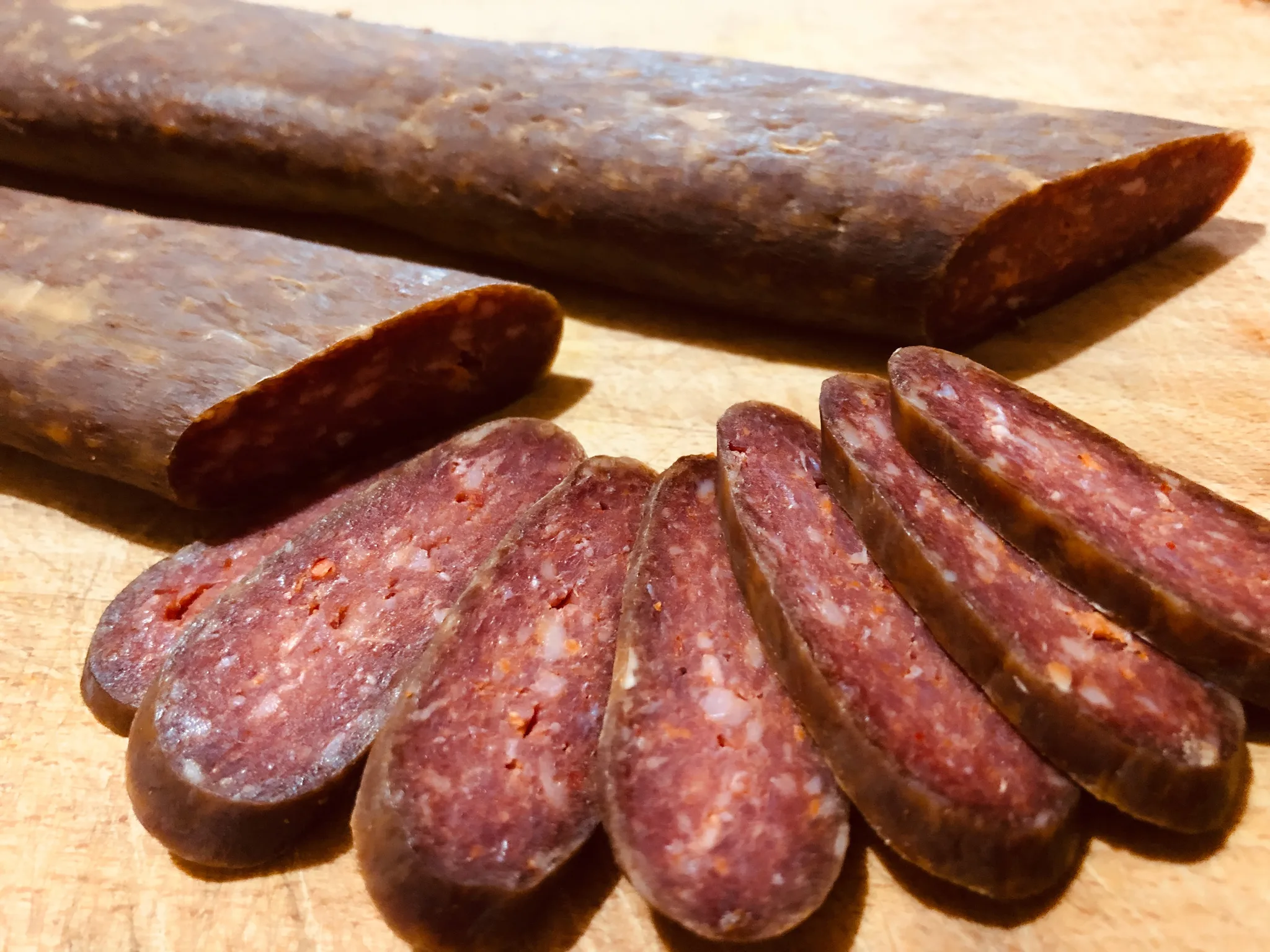
Babic
Product description:
A traditional raw-dried salami from Buzău County. There ate several recipes for Babic. Today, it is typically made from a mixture of pork and beef, seasoned with salt, sweet paprika, and hot paprika, then stuffed into thin beef casings, pressed, smoked, and dried during the cold winter months. The original recipe was made only with pork. Its distinctive flat shape comes from a pressing process with a rolling pin during drying. Spiciness ranges from mild to intense depending on the paprika ratios.
History:
Babic is the historical sibling of Buzău. The Bulgarian and Serbian refugees who settled in the Buzău area at the end of the 18th century, in the aftermath of the Russo-Turkish wars, adapted the local recipe — but with pork instead of mutton, probably to spite the Ottomans, and with the addition of dried, finely cut chilli pepper. The result became what is today known as the Buzău babic, or the Buzău Serbian babic. The product emerged out of household economy: every farm kept a pig or two and a cow, and babic was a way to preserve and stretch winter meat supplies.
Meaning for Buzău's food identity:
Babic is the county's “cultural fusion” product — a literal edible record of migration, Ottoman geopolitics, and the Serbian-Bulgarian diaspora of the Buzău plain. Internationally, it has been ranked among the world's best salamis on TasteAtlas (around #36 best-rated meat product), giving it gastronomic credibility well beyond the region.